

The study has led to speculation that this could partly explain why anatomically-modern humans proved more successful than other species such as Neanderthals that did not avoid inbreeding.
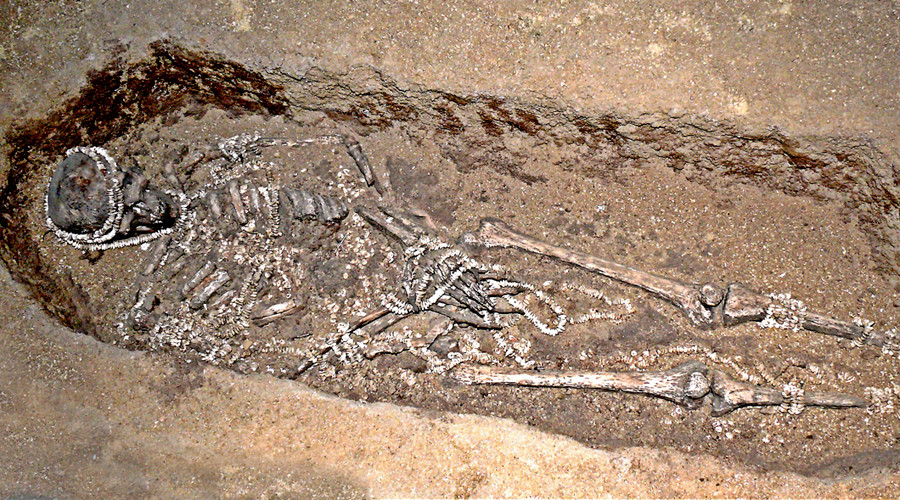
Researchers examined genetic remains of four anatomically-modern humans from Sunghir, an Upper Paleolithic site in Russia. Unusually for finds from this period, the people were found buried together.
To the researchers’ surprise, the individuals were not closely related in genetic terms. At the very most, they were second cousins. This is true even in the case of two children who were buried head-to-head in the same grave.
Objects and jewelry found buried with the remains suggest they may have developed rules, ceremonies and rituals to accompany the exchange of mates between groups which perhaps foreshadowed modern marriage ceremonies.
Professor Eske Willerslev, fellow at St John’s College, Cambridge, said in a statement: “What
this means is that even people in the Upper Paleolithic, who were
living in tiny groups, understood the importance of avoiding inbreeding.
“The
data that we have suggest that it was being purposely avoided. This
means that they must have developed a system for this purpose. If small
hunter–gatherer bands were mixing at random, we would see much greater
evidence of inbreeding than we have here.”By comparison, genomic sequencing of a Neanderthal individual from the Altai Mountains who lived about 50,000 years ago indicated inbreeding was not avoided.
It led researchers to speculate that an early, systematic approach to preventing inbreeding may have helped anatomically-modern humans to thrive, compared with other hominins.


No comments: