


The Duchy of Lancaster, which provides the Queen with an income, held funds in the Cayman Islands and Bermuda.
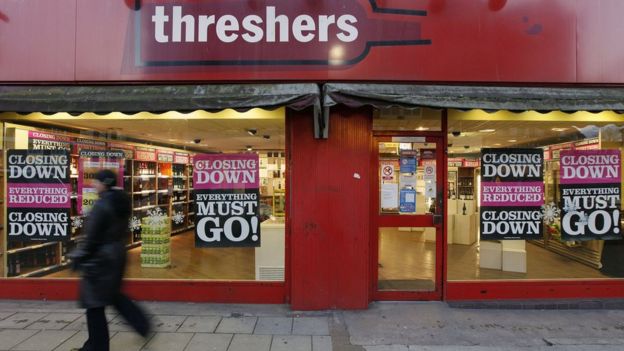
A small amount ended up in the company behind BrightHouse, a chain accused of irresponsible lending, and Threshers, which went bust owing £17.5m in UK tax.
The Duchy said the BrightHouse holding now equates to £3,208 and it was not involved in fund investment decisions.
It added it had been unaware the stores featured in the investments.
The chief finance officer of the £500m estate, Chris Adcock, told the BBC: "Our investment strategy is based on advice and recommendation from our investment consultants and appropriate asset allocation...

A spokesperson for the Duchy of Lancaster added: "We operate a number of investments and a few of these are with overseas funds. All of our investments are fully audited and legitimate.
"The Queen voluntarily pays tax on any income she receives from the Duchy."
Duchy's reputation
Details about the Duchy's investments came to light in the Paradise Papers - a leak of 13.4m documents from companies including Appleby, one of the world's leading offshore law firms.
The two funds were based in British overseas territories with no corporation tax and at the centre of the offshore financial industry.
But the Duchy said it was not aware there were tax advantages to it from investing in offshore funds, adding that tax strategy was not a part of the estate's investment policy.
The documents show the Duchy of Lancaster put £5m in the Jubilee Absolute Return Fund Limited in Bermuda in 2004, with the investment coming to an end in 2010.
In 2005 the Duchy agreed to put $7.5m (£5.7m) in the Dover Street VI Cayman Fund LP.
Documents show the fund invested in medical and technology companies.
The connection to rent-to-buy firm BrightHouse began in 2007 when the US company running the fund asked the Duchy to contribute $450,000 to five projects, including the purchase of the two UK High Street retailers.
This included an interest in London-based private equity firm Vision Capital, the company which acquired 100% of BrightHouse and 75% of the owners of Threshers off licence chain.


The majority of Vision Capital's BrightHouse investment later ended up in a company based in Luxembourg and it began paying less corporation tax in the UK.
Last month, the UK's financial regulator, the Financial Conduct Authority, said BrightHouse, which sells electrical goods and furniture predominantly to people on lower incomes via weekly installments, had not acted as a "responsible lender" and ordered it to pay £14.8m compensation to 249,000 customers.
The Duchy said its investment in the Cayman Islands fund is due to continue until 2019 or 2020 and amounts to 0.3% of the total value of the estate, while its interest in BrightHouse now equates to just 0.0006% of its wealth. The Duchy did not provide a figure for its interest in Threshers.
A Vision Capital spokesperson said: "Vision Capital complies with all laws and regulations and pays its tax in full and on time. Any suggestion to the contrary is wrong."
The Duchy's 2017 annual report says it "gives ongoing consideration regarding any of its acts or omissions that could adversely impact the reputation of the Duchy or Her Majesty The Queen".
"It is so obvious that if you're looking after the money of the monarchy, you've got to be actually cleaner than clean and you must never go near the dirty world of money laundering, tax avoidance, tax evasion or actually making money in dubious ways," she said.
'Preying on the vulnerable'
The business model of BrightHouse has long come under the spotlight.
A parliamentary report in 2015 said the company was charging interest rates of up to 94%. One in five customers were in arrears and one in 10 purchases ended in repossession. In one case examined by MPs and Lords, a Samsung freezer cost £644 to buy in John Lewis but £1,716 under a five-year plan from the chain.
BrightHouse was attracting attention at the time of the Duchy's investment - with the Financial Times challenging its chief executive in November 2008 to respond to accusations that the chain was "preying on the vulnerable".
The company maintains it is a responsible lender and through its 300 stores provides a services to millions of Britons who are unable to access up traditional lines of credit.
BrightHouse told the Guardian newspaper it follows all relevant tax regulations and pays its tax in full and on time.
BrightHouse was attracting attention at the time of the Duchy's investment - with the Financial Times challenging its chief executive in November 2008 to respond to accusations that the chain was "preying on the vulnerable".
The company maintains it is a responsible lender and through its 300 stores provides a services to millions of Britons who are unable to access up traditional lines of credit.
BrightHouse told the Guardian newspaper it follows all relevant tax regulations and pays its tax in full and on time.
The Duchy of Lancaster's $450,000 commitment to the "capital call" is listed in the documents.
Full disclosure
Established more than 700 years ago, the Duchy of Lancaster has a commercial and residential property portfolio and financial investments.
Its main purpose is to provide income for the Queen, who is known as the "Duke of Lancaster".
Although the Duchy is not subject to tax, since 1993 the Queen has voluntarily paid tax on any income she receives.
The Duchy's annual report and accounts include a summary of its holdings and financial performance and are put before Parliament. The offshore investments were not referenced in the reports but there is no requirement for specific details of the Duchy's holdings to be disclosed.
Dave McClure, the author of a book about the wealth of the Royal Family."pressure will grow on the Duchy to open up to proper parliamentary scrutiny by the National Audit Office, which they've resisted for decades.
"The solution to the problem might be just full disclosure, so everyone knows what investments they're investing in."
The Duchy said the Queen "takes a keen interest in the Duchy's estates and tenants" but "appoints a chancellor and the Duchy Council to administer the affairs of Her Duchy. The chancellor delegates the oversight to the Duchy to the Council".
Investors in the Dover Street VI Cayman Fund LP made a commitment for a "given period" and are "not party to its ongoing investment decisions" or where money is "ultimately invested", it added.
Asked whether the Duchy had other investments in offshore funds, it said it "currently invests in a fund domiciled in Ireland".
The Chancellor of the Duchy of Lancaster is a government minister and sits in the cabinet, but plays a nominal role in running the estate. The current chancellor is Sir Patrick McLoughlin MP, the Chairman of the Conservative Party.
At the time the Duchy initially invested in the Dover Street VI Cayman Fund LP in September 2005, its chancellor was Labour MP John Hutton.


No comments: