

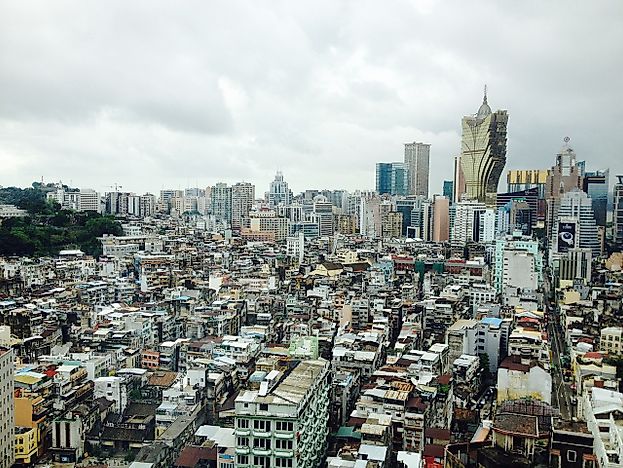
It pertains to a population of a city, town, country, or the whole world. The inclusion or exclusion of deserts, lakes, or habitable polar regions may make human density increase or decrease as measured by government agencies. Areas where there are more people may or may not have complete services and infrastructure, resulting in overpopulation. Historically, large populations are normally clustered around water sources but today, human density is greatest in countries where migration is allowed due to more job availability.
Countries with High Human Density Problems
Densely populated countries often affect the environment in many
negative ways putting stress on natural resources. Migration to coastal
areas often results in the slow sinking of coastline villages.
Socioeconomic and geopolitical implications vary around the world as a
result of human migration which could become unsustainable.
Overpopulation of a region or city uses up resources that are already
overstressed. In most Asian countries these would include colonization
programs that allow the conversion of forest lands to arable lands.The following countries have the highest human population density in the world today. As per most recent estimates, Macao tops the list at 55,301 people per square mile. Traffic congestion, bad air quality, and social problems have increased. Monaco is second with 49,236 people per square mile. Water and drought problems may have escalated. Singapore is third with 19,935 people per square mile. Land scarcity and water problems have increased as well. Hong Kong, SAR of China
is fourth with 17,156 people per square mile. Air quality problem,
scarce rainfall, and high housing prices come with densely populated
Hong Kong. Gibraltar (British Possession) is fifth with 11,054 people
per square mile. Air pollution, traffic, and boundary conditions have
increased due to population density. Bahrain
is sixth with 5,038 people per square mile. Acute water shortage,
desertification, agricultural sector, and food security have remained a
problem. Vatican is seventh with 4,709 people per square mile. As a result of tourism, petty thievery occurs. Malta is eighth with 3,504 people per square mile. Healthcare, illegal immigration, and agricultural land are part of this problem. Bermuda
(British Possession) is ninth with 3,248 people per square mile.
Environmental issues and natural resources depletion count as a result
of human density in the nation. Bangladesh is tenth with 2,892 people per square mile. Economic and cultural issues have increased due to human population density.
Social, Economic & Political Effects
Socioeconomic changes are felt as human population density increases. Natural resources are depleted as more people migrate to one country. Government becomes incapable of providing basic human services. As the population ages, medical services become inadequate. As a result, an informal sector forms to offset the system’s inadequacies. Government resources are stretched resorting to higher taxes. Alternatives are introduced to decrease a country’s population by stricter immigration laws and higher job qualifications criteria. Agencies introduce population control resulting in an imbalance between the aging population and the younger population. Geopolitical effects are felt in countries that allow a larger number of workers that affects neighboring countries and regions.| Rank | Country | People Per Square Mile |
|---|---|---|
| 1 | Macao, SAR of China | 55,301 |
| 2 | Monaco | 49,236 |
| 3 | Singapore | 19,935 |
| 4 | Hong Kong, SAR of China | 17,156 |
| 5 | Gibraltar (British Possession) | 11,054 |
| 6 | Bahrain | 5,038 |
| 7 | Vatican | 4,709 |
| 8 | Malta | 3,504 |
| 9 | Bermuda (British Possession) | 3,248 |
| 10 | Bangladesh | 2,892 |


No comments: