

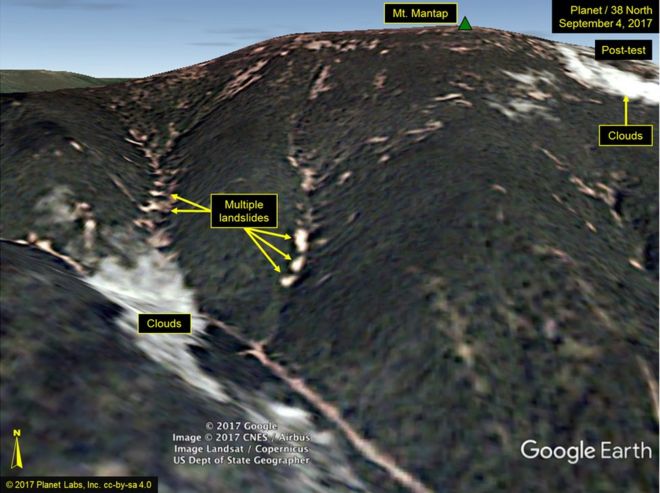
Sunday's test took place underground at the mountainous Punggye-ri site.
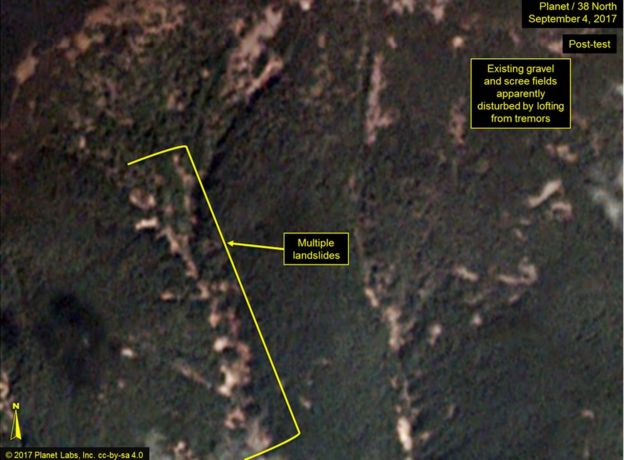
Analysis group 38 North published pictures which show "more numerous and widespread" disturbances than before.
North Korea has conducted six nuclear tests so far, all at Punggye-ri, which consists of a system of tunnels dug beneath a mountainous region.
What we know about North Korea's nuclear test site
How do you defend against North Korea?
North Korea crisis in 300 words
North Korea: Does this mean war?
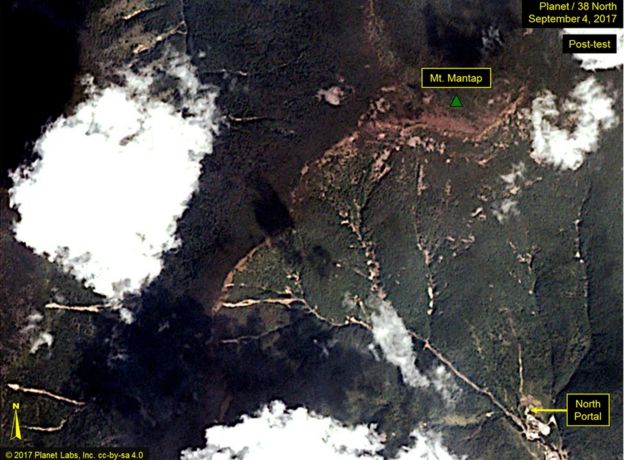
38 North said its latest pictures, which were taken a day after the latest test, showed landslides as well as numerous areas of gravel and scree fields which were "lofted" from the tremors.
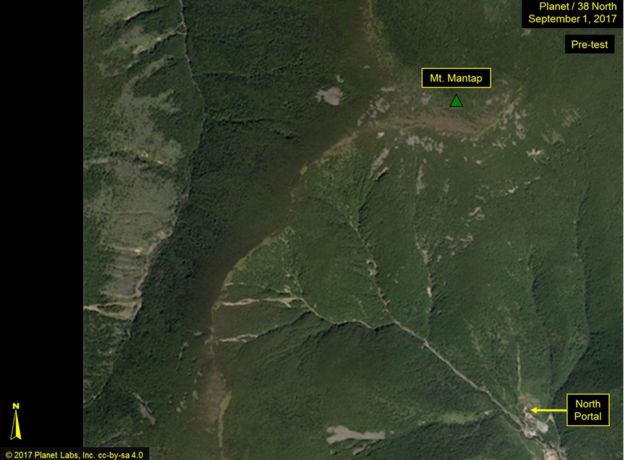
The disturbances took place near Mount Mantap, the highest point in the test site.
They were "more numerous and widespread than what we have seen from any of the five tests North Korea previously conducted", the site's analysis said.
But it added that while the test triggered a powerful tremor, it did not appear to have caused the crater to collapse.
Sunday's bomb was thought to have had a power range from 50 to 120 kilotonnes. A 50kt device would be about three times the size of the US bomb that destroyed Hiroshima in 1945.
The repeated tests have prompted concerns about the test site's longevity, although experts are divided.
Can we work out the power of the tested bomb?
Can the world live with a nuclear North Korea?
Have North Korea's missile tests paid off?


No comments: