

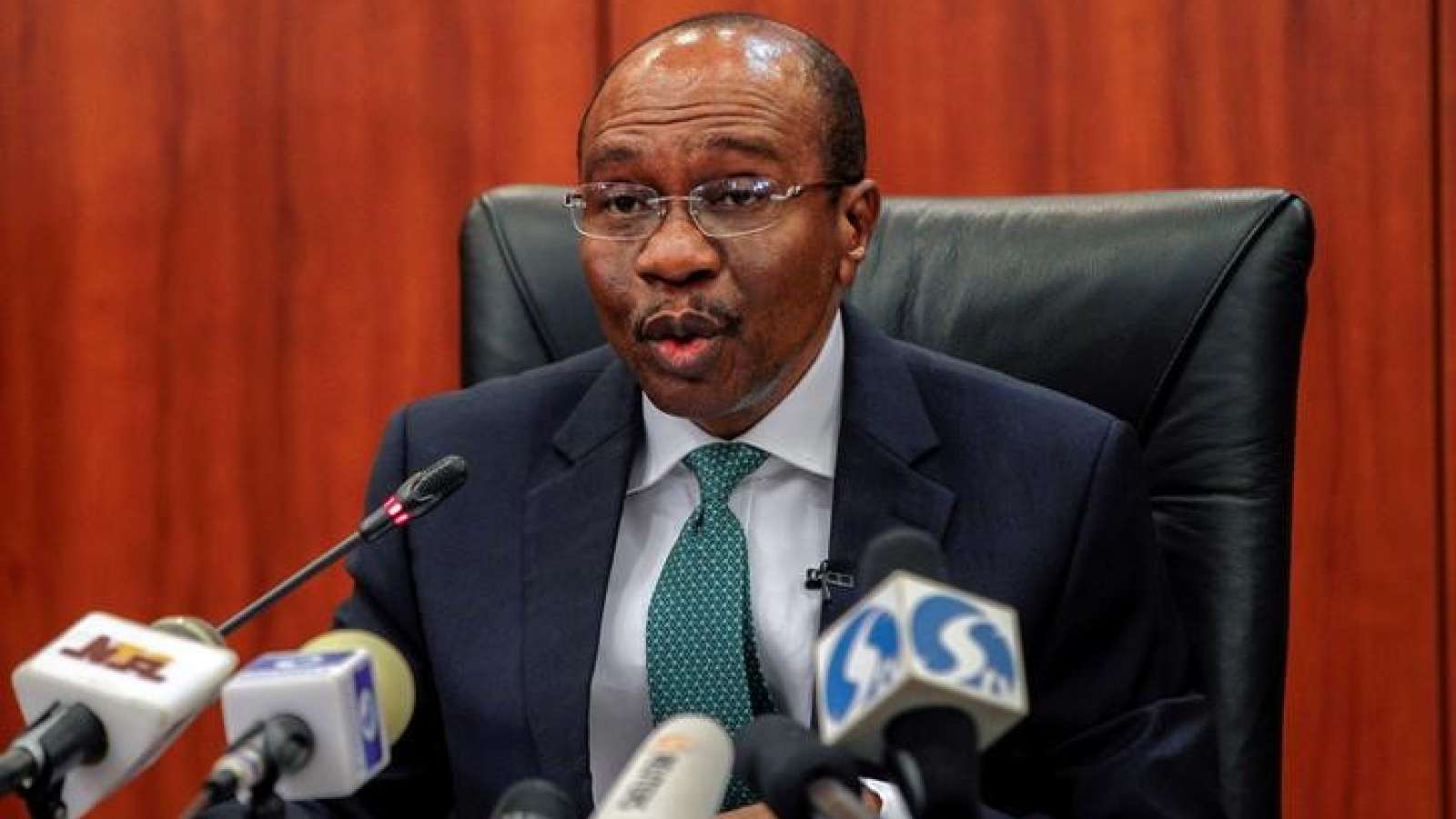
The Governor of the Central Bank of Nigeria (CBN), Mr.
Godwin Emefiele has affirmed that with the Nigerian economy exiting the
recession, following a number of policy responses, the worst days were clearly
behind the country......
Emefiele noted that based on analyses and understanding of
the developments which confronted the country, the central bank took a number
of measures, many of which were at the time vigorously criticised, but which
helped the economy out of the recession.
Tracing the economic recession to the significant and
persistent drop in commodity prices that affected the economy adversely,
Emefiele said the resultant effect was depressed GDP growth, rising inflation,
depreciation of the exchange rate, as well as depletion of the country’s
foreign exchange (FX) reserves, and the decline in average FX inflows.
Emefiele, who delivered the 47th convocation lecture of the
University of Nigeria, Nsukka (UNN) yesterday, pointed out that the
vulnerabilities of Nigeria to the global shocks were amplified because of the
nation’s over-reliance on the oil sector for FX revenue and for government
finances.
“Even at the height of high oil prices, rather than save, we
drained our buffers through an excessive dependence on imports, most of which
could be produced locally.
“Based on our analyses and understanding of these developments,
the Bank took a number of measures many of which were at the time vigorously
criticised,” he said.
The CBN governor noted that in the realm of monetary
policies, the CBN embarked on a cycle of policy tightening to rein in
inflation, using the Monetary Policy Rate (MPR) and Open Market Operations
(OMO).
In external reserve management, he noted that the CBN
adopted demand management through essential commodities while a number of
actions were taken in the area of exchange rate management to stabilise the
exchange rate.
“In development finance, the Bank continued its financing
activities in key high-impact sectors like power, aviation, education, MSME,
agriculture, including CAC’s, ACGs, NIRSAL, the Anchor Borrowers’ Programnme,
etc.
“In the light of these and other policy responses, we are
delighted that the economy has turned the corner with our worst days clearly
behind us,” Emefiele said, adding that gross domestic product (GDP) growth
recovered after five quarters of continuous contraction while inflation dropped
from a peak of 18.7 per cent in January 2017 to 15.9 per cent in November.
He also noted that the positive indicators also manifested
in the areas of exchange rate appreciation, improved FX supply, recovery in FX
reserves, significant boost in local production, as well as improvement in the
World Bank’s ‘doing business indicator’.
The CBN chief executive, whose convocation lecture dwelt on
“A Mindset for Succeeding in Today’s Nigeria”, noted that the boost in local
production was important because of the demographic factors.
“Imagine that today, Nigeria is estimated to have a population
of over 180 million people, and this population is predicted by the United
Nations to be 398 million people by 2050, which would make Nigeria the third
largest in the world by that time.
“These trends present a significant opportunity for our
graduates to turn whatever challenges they may be facing into opportunities
that can harness these demographic shift. Imagine what would happen if Nigeria
and Nigerians cannot provide food, shelter, clothing, health, education, and
other basic things for the teeming population.
“Even though these trends should already begin to bother
current leaders in our country today, I believe that young Nigerians can begin
today to see these trends as opportunities and think of what they can do to
take advantage of the situation,” he observed.
He reeled off names of many young and successful Nigerians,
who rather than complain about what the government did not do for them,
identified common problems and needs of the society and created solutions that
turned them into millionaires.
The CBN governor disclosed that the Bank was currently
reviewing the broad framework of its development financing funds with a view to
creating new channels through which entrepreneurs with great ideas can access
credit without dissipating much effort.
Some of the central bank’s development financing fund
initiatives include the N220 billion initiative for MSMEs, Anchor Borrowers’
Programme, and Agricultural Credit Guarantee Scheme, among others.
He disclosed that the federal government and the CBN were
encouraging the Deposit Money Banks (DMBs) and other development finance
institutions to create awareness through which innovative entrepreneurs could
access credit with a view to creating opportunities for job creation.
Emefiele also admonished universities and other tertiary
institutions across the country to focus on research, evolve innovative
approaches to job creation and income generation, and form business units,
assuring that the CBN was willing to provide the necessary financing.
As part of the CBN’s efforts to address the challenges of
unemployment, promote entrepreneurial spirits among Nigerian youths and enhance
the spread of small and medium enterprises, Emefiele stated that the central
bank designed and formulated a number of policies and programmes for direct
real sector intervention.
According to him the Bank’s Youth Entrepreneurship
Development Programme (YEDP), which was launched on March 15, 2016 and run in
collaboration with banks and the National Youth Service Corp (NYSC) had helped
recently discharged corps members access concessionary financing of up to N5
million for innovative job creating ventures.
Addressing the graduating students, Emefiele, himself an
alumnus of the institution, urged young graduates to embrace the philosophy of
being job creators rather than job seekers by availing themselves of the Bank’s
financing window through creative entrepreneurial and innovative ways.
“As you leave the university and proceed to the NYSC, I
encourage you graduands to take advantage of this. In addition, there is also
the N220 billion CBN initiative to support micro, small and medium scale
enterprises (MSMEs). This is aimed at encouraging entrepreneurship development
and creating an environment that supports business success.
“It is our firm belief that our modest contributions are
already yielding the expected dividends for all to see. These schemes are set
up solely for your use, please take advantage of them,” the CBN governor
advised.
He, however, admitted that the government was expected to
provide the impetus and enabling environment while also acknowledging that
there were problems associated with the ease of entrepreneurs accessing credit.
“Let me state that the federal government, including the
CBN, is encouraging the Deposit Money Banks and other development finance
institutions to create awareness through which innovative entrepreneurs can
access credit with a view to creating opportunities for job creation.
“At the moment, the CBN is reviewing the broad framework of
its development financing funds through which entrepreneurs with great ideas
can access credit with minimal effort,” he said.
Emefiele, who noted that the lecture was a noble homecoming
for him, having graduated from the university 34 years ago, said he always has
nostalgic feelings about his alma mater.
In his remarks, the chairman of the convocation lecture and
a former governor of the CBN, Prof. Chukwuma Soludo, observed that in spite of
the nation’s challenges, “there are flickers of hope”.
He told the graduating students that the message of
Emefiele’s lecture was that as they graduate, they should find opportunities in
the midst of adversity, noting that it may not be rosy out there for all of
them.
Soludo, however, reminded the government that jobs cannot be
created by applying the tools that held sway in the past decade but through
creative and innovative ways.
While calling for creative thinking by all, Soludo noted
that although the country has exited the recession, the development was propelled
by the oil sector.
According to him, the non-oil sector still contracted based
on the last GDP figures released by the National Bureau of Statistics (NBS),
calling for a collective solution to the nation’s challenges.


No comments: